 MonetizeBetter We Help You Monetize Better Your Digital Assets! 💰👍


I just got back from Atlas Digital Summit 2026 [Website], held on September 28 and 29 in Reykjavik, Iceland, where I co-hosted a Hosting Track roundtable on AI Search Visibility. It was the first edition of the summit, and it was a different kind of event from the domain and hosting conferences I usually cover on this blog (Domain Days Dubai, Domain Summit, Nordic Domain Days, CloudFest, etc.). Below is my recap: what the event was, how it was run, and the ideas that stood out.
The discussions took place under the Chatham House Rule, so I’m sharing the ideas and data points that came up, not who said what.
TLDR: Atlas Digital Summit 2026 recapAtlas Digital Summit is a private, invite-only executive summit for hosting, data center, and cloud infrastructure leaders, focused entirely on how AI is reshaping the industry. Organizer Jason Nickerson raised the bar for B2B hosting and AI events with a roundtable-first format. The big themes: bots now outnumber humans online, AI-generated code is scaling faster than security verification, and nobody has a sharp answer yet on whether the web becomes machine-first. A dedicated post on AI Visibility and the roundtable I co-hosted is coming next.
What is Atlas Digital Summit?
Atlas Digital Summit is not simply another event discussing Generative AI, MCPs, automation, or the latest tools. The summit centers on a larger question: how will AI reshape the infrastructure layer hosting companies operate every day?
From server strategy and platform automation to backup, recovery, security, customer support, compliance, pricing, workload management, and operational scale, the program covered the questions hosting leaders are working through right now.
Unlike a traditional conference built around large stages and crowded expo floors, Atlas Digital Summit centers on curated executive roundtables, strategic conversations, and peer-to-peer collaboration. It was held at the Gamla Bió Theater in Reykjavik, with roundtables in the Petersen Suite and the opening party on a rooftop terrace.
Why Iceland, why now?
The four questions the summit was built to answer
- How do hosts protect customers building with AI-generated code?
- How do data centers balance AI demand with power and sustainability?
- How do infrastructure providers prepare for larger, faster, more automated attacks?
- How do hosting companies turn AI disruption into new revenue?
Iceland isn’t a random venue choice. The country runs on a 100% renewable grid, and the organizers use it as a working example for the sustainable AI infrastructure conversation, not just a scenic backdrop. A few numbers from the summit’s own research framed why the topic is urgent:
- 45% of AI-generated code samples still contain security flaws, even across the latest frontier models (Veracode, Spring 2026)
- 78% of tech leaders report more production incidents from AI-generated code, and 62% ship it without verifying it (New Relic, 2026)
- $661B is the projected size of the global web hosting market by 2034, up from $149.3B in 2025 (Fortune Business Insights)
Eight takeaways from Reykjavik
Here are the ideas from the keynote, roundtables, and hallway conversations that I think are most useful.
1. Bots now outnumber humans
Bot traffic is now over 53% of total website traffic, surpassing human traffic. The reasons are multiple: crawlers, scrapers, and agents that now consume content. Security companies struggle to distinguish legitimate AI bots from malicious ones.
2. Vibe-coded apps are a hosting problem
Every day, over 33,000 new WordPress websites and over 147,000 Lovable projects are created. Many hosting companies wonder how to host vibe-coded apps beyond the usual PHP stack built for WordPress, since the setup isn’t as easy.
3. AI writes more code, and much of it is insecure
AI-generated code grew to 75% of Google’s new code. Overall, however, 45% of AI-generated code fails security tests. Volume is rising faster than verification.
4. Finding vulnerabilities with AI is not deterministic
During a security panel, I learned that security companies have to run multiple tests on the same model and code to identify vulnerabilities, since results differ across runs. Results also differ when different models are used. One proposed solution is to release advanced models to security companies and select developers first, so they can patch vulnerabilities before bad actors find them.
5. AI support works best under pressure
A leading hosting company has implemented AI support, which has been especially helpful during peak times, when a newly discovered vulnerability or an outage makes support tickets rise sharply in a short period.
6. Hallucinations still need active management
The same hosting company’s representative said there is still a 5% hallucination rate, which they monitor closely and work on reducing. One way is to create knowledge base content that AI can read easily.
7. Search is increasingly zero-click
Over 68% of Google searches now end without a click, based on a June 2026 report. That is rewriting how people discover products and services, and it is the core of the AI Visibility conversation I’ll cover in my follow-up post.
8. The open question: machine-first or human-first web?
One question didn’t get a sharp answer: will we rewrite the web to be machine-first, or keep it human-first and make machines adapt to it? The market is split. Amazon blocks assistants like Muse for now, while Shopify fully embraces agentic commerce.
The agenda: two days, two tracks
The summit ran two parallel tracks throughout, Hosting and Security, with AI as the thread connecting every keynote, panel, and roundtable. Robert Jacobi emceed both days, and every roundtable block ran both tracks in parallel, so attendees picked a table based on whether they were closer to the hosting or security side of the business.
Day One – AI, Strategy & The Future Hosting Stack
- 10:30 AM – Opening Keynote: The Next Web: When Machines Browse, Build, and Buy by Luke Langford
- 11:15 AM – Roundtable Block 1: Meeting the AI-First Customer – Hosting Track led by TJ Danklefs, Security Track led by Aaron D. Campbell
- 2:30 PM – Roundtable Block 2: Defending the Stack – Hosting Track led by Robbie Adair, Security Track led by Sergei Gruntovskii
- 4:00 PM – Roundtable Block 3: Operating at the Edge of Risk – Hosting Track led by Panos Kesisis, Security Track led by Aaron D. Campbell
- 5:00 PM – Networking Party on the Rooftop Terrace
Day Two – AI Operations, Compliance & What’s Next
- 10:30 AM – AI Fireside Chat: AI, Regulation & Resilience with Robert Jacobi, Ana Rojo-Echeburúa, Bergþóra Halldórsdóttir, and David Snead
- 11:15 AM – Roundtable Block 4: From Infrastructure to Strategic Partnerships – Hosting Track led by Jesse Friedman, Security Track led by Aaron D. Campbell
- 2:30 PM – Roundtable Block 5: Building & Securing AI-Native Hosting – Hosting Track led by me and Carolyn Shelby, Security Track led by Thomas Raef
- 4:00 PM – Roundtable Block 6: The Future Hosting Business – Hosting Track led by Nadya Frost, Security Track led by Benny Vasquez
- 5:00 PM – Summit Closing Session – What Comes Next for AI-Era Digital Infrastructure
Monarx was the platinum partner, and the sponsor list also included CloudLinux, WebPros (the group behind cPanel, Plesk, WHMCS, and SolusVM), Blackwall, Duda, SuperDeploy, and Okta.
My session: AI Visibility for Hosting & Infra Companies
I co-hosted the Hosting Track table in Block 5 on Day Two with Carolyn Shelby, while Thomas Raef ran the parallel Security Track table on AI-driven threat detection.
The table focused on a question I get constantly from hosting and infrastructure clients: how do you win discovery when buyers ask ChatGPT, Perplexity, or Google AI Overviews which provider to choose, instead of typing a query into a search box?
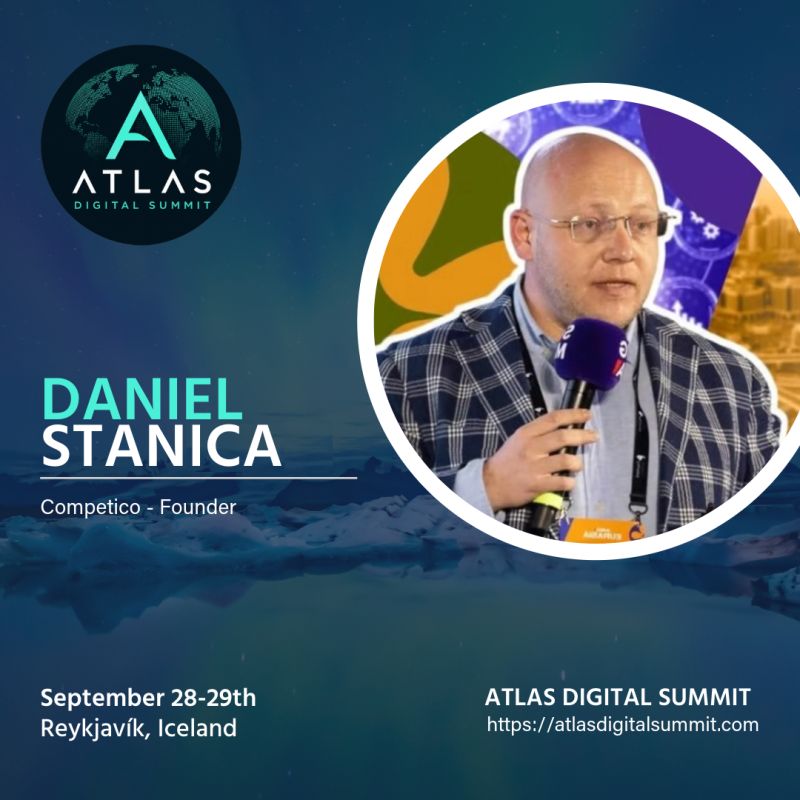
We covered how to structure technical content, schema, and brand signals so AI engines cite your platform when someone asks which hosting provider fits their needs. It is the same AI Visibility work I do through Competico. I’ll publish a dedicated post on the session and the ideas from the table.
Overall impressions
Atlas Digital Summit was a well-organized event that mixed keynote speeches with roundtables that sparked debate, plus plenty of networking sessions. The attendees were curious, sharp minds from across the industry, and it showed in the conversations and questions. Jason Nickerson set a high bar for a first edition.
People I had the chance to speak with
Stay updated
You can follow the summit directly through these channels:
- Website: atlasdigitalsummit.com
- X/Twitter: atlasdigitalsum
- LinkedIn: atlas-digital-summit
- Event page: Visit the website
Conclusion
Atlas Digital Summit was a narrower, more deliberate event than the domain and hosting conferences I usually cover here, and that was exactly the point: two tracks, six roundtable blocks, one keynote, one fireside chat, and a room full of people who actually run this industry rather than sell to it. The questions raised in Reykjavik, from bot traffic to insecure AI-generated code to a machine-first web, will keep shaping hosting and infrastructure well beyond this week.
P.S. If you’re a hosting or infrastructure exec figuring out how your company shows up when buyers ask AI tools which provider to pick, get in touch. My dedicated AI Visibility post from the roundtable is coming next.


